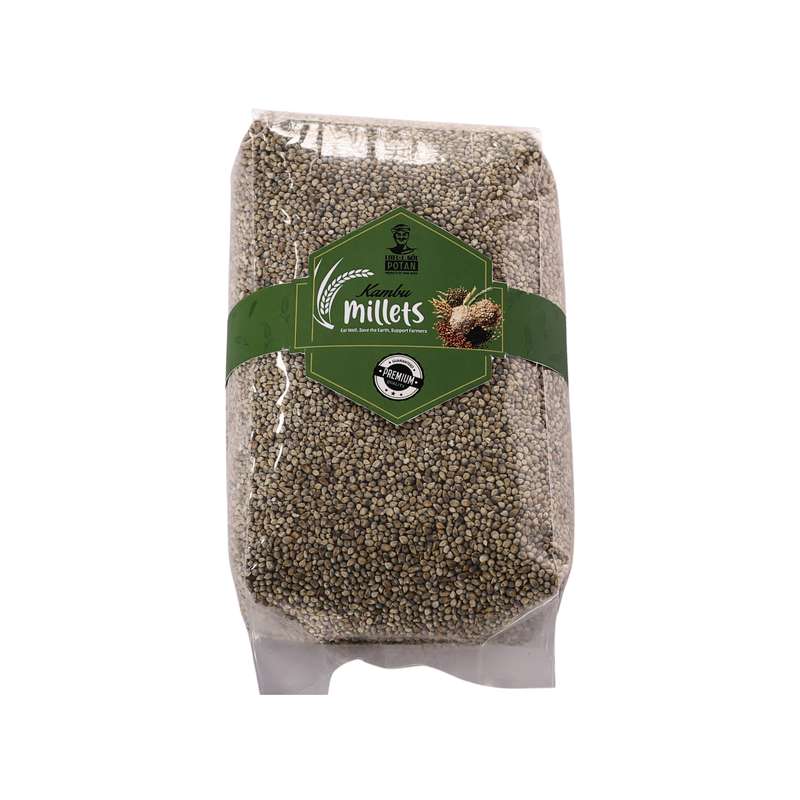
Kambu, scientifically identified as Pennisetum glaucum and known as bajra across northern India, represents one of Tamil Nadu’s most culturally significant summer grains, deeply embedded in the state’s agricultural traditions and culinary heritage, particularly in the southern and coastal districts. In Tamil Nadu, kambu cultivation flourishes primarily in Ramanathapuram, Virudhunagar, Tirunelveli, Thoothukudi, Karur, Perambalur, Salem, and the coastal plains where the combination of dry climatic conditions, sandy loam to loamy soils, and modest rainfall of 40-50 centimeters creates optimal growing environments for this drought-resistant crop.
Tamil Nadu farmers traditionally cultivate kambu during the Kharif season with sowing operations beginning in June-July coinciding with monsoon onset, and harvesting typically occurring during September-October after a growing period of 80-100 days, though some farmers in irrigated pockets also grow summer crops during February-May. The cultivation of kambu across Tamil Nadu’s rain-fed regions provides crucial livelihood security to marginal farmers operating on lands where more water-intensive crops like paddy cannot viably grow, making it an essential component of the state’s dryland agricultural economy and food security systems.
Nutritionally, kambu delivers exceptional benefits containing 11-12 grams of protein per 100 grams, an impressive 11-12 grams of dietary fiber supporting digestive health, 8 milligrams of iron crucial for preventing anemia, 42 milligrams of calcium for bone health, and 137 milligrams of magnesium supporting cardiovascular function, with a glycemic index of 54 making it suitable for diabetic diets. Tamil Nadu’s unique cultural relationship with kambu centers on its role as a traditional summer food, with Ayurvedic and Siddha medicine principles classifying kambu as having cooling properties that help the body maintain thermal balance during the scorching summer months from March through June when temperatures soar above 40 degrees Celsius across much of the state.
The iconic Tamil preparation kambu koozh—a fermented porridge made by soaking and fermenting kambu flour, then mixing it with buttermilk, salt, and sometimes onions and green chilies—represents quintessential Tamil summer food, sold by street vendors, consumed by laborers for sustained energy, and treasured by rural and urban families alike as both comfort food and health food. Tamil culinary applications of kambu extend far beyond koozh to include kambu roti served daily in countless households, kambu dosai as fermented breakfast crepes, kambu upma as a savory breakfast option, kambu puttu steamed with coconut, kambu adai as thick nutritious pancakes, and increasingly creative modern preparations like kambu idli and kambu pasta catering to urban consumers seeking traditional nutrition in contemporary forms.
Throughout Tamil Nadu’s southern districts, kambu cultivation and consumption represent cultural identity, with families maintaining traditional seed varieties adapted to local conditions over generations, communities organizing collective harvesting and processing activities, and elders passing down specialized knowledge about preparing kambu in ways that maximize nutrition while enhancing digestibility through fermentation and other traditional processing methods. The summer months transform Tamil Nadu’s streetscapes as kambu koozh vendors appear on roadsides, in bus stands, near temples, and in market areas, serving this cooling beverage to workers, travelers, and anyone seeking relief from the heat, making kambu koozh an iconic symbol of Tamil summer culture comparable to how ice cream represents summer in Western cultures.
Tamil Nadu’s agricultural calendar recognizes kambu’s strategic importance as a crop that provides food and income during the challenging summer season when water scarcity limits other agricultural activities, making it indispensable for the economic sustainability of dryland farming communities across approximately one-third of the state’s agricultural lands. Modern Tamil Nadu witnesses a kambu revival driven by multiple factors including increasing awareness of climate change requiring drought-resistant crops, growing health consciousness about fiber-rich whole grains, scientific research validating traditional knowledge about kambu’s cardiovascular benefits, urban restaurants featuring traditional kambu preparations, and government policies supporting millet cultivation through the Tamil Nadu Millets Mission that provides subsidized seeds, technical training, and market linkages.
Despite these positive developments, kambu cultivation in Tamil Nadu faces significant challenges including competition from commercial crops with better established market infrastructure, younger farmers’ reluctance to grow traditional crops perceived as less profitable, breakdown of traditional seed preservation systems, lack of modern processing equipment specifically designed for kambu’s unique grain characteristics, and need for consumer education especially among urban middle-class families whose grandparents consumed kambu regularly but whose children have never tasted it, requiring innovative approaches bridging heritage and modernity to ensure kambu remains vital to Tamil Nadu’s agricultural and culinary landscape.



Reviews
There are no reviews yet.