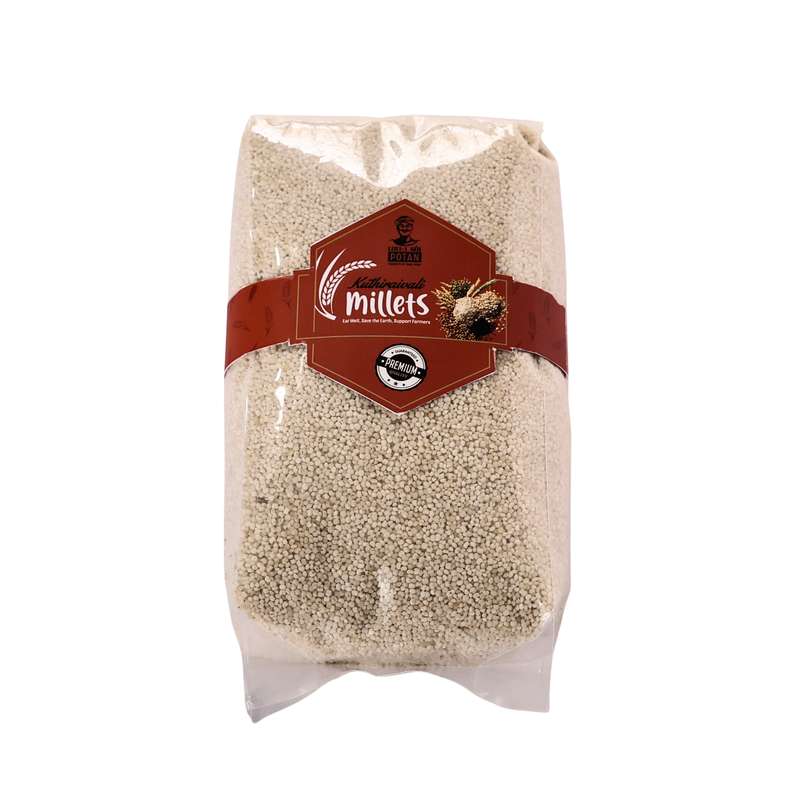
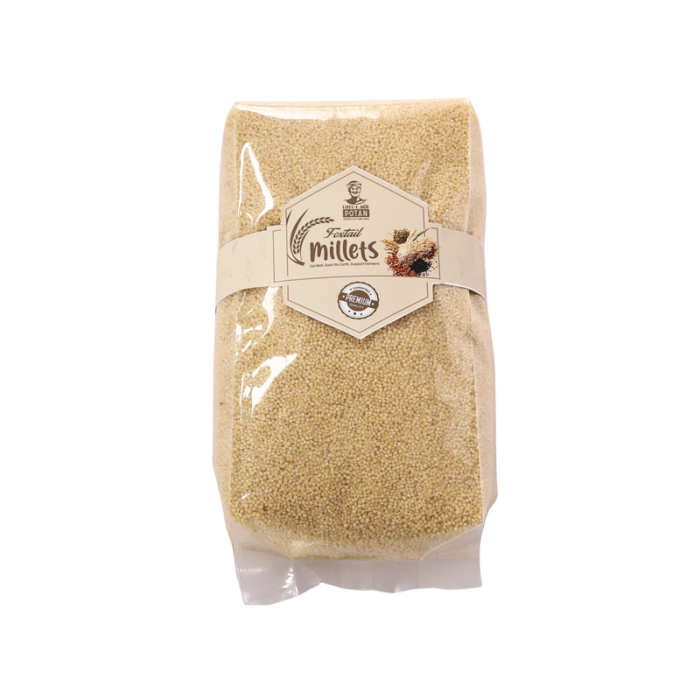
Kuthirai Valli, botanically termed Echinochloa esculenta and named “horse tail” in Tamil due to its distinctive flowering spike resembling a horse’s tail, represents one of the fastest-growing and most versatile millets in Tamil Nadu’s traditional agricultural repertoire.
This remarkable grain finds cultivation across Tamil Nadu’s diverse agro-climatic zones including Salem, Dharmapuri, Coimbatore, Madurai, and various hill regions, thriving in conditions ranging from well-drained uplands to areas with temporary waterlogging that would devastate most other grain crops. Tamil Nadu farmers traditionally sow kuthirai valli during the Kharif season between June and August, taking advantage of monsoon rains, and remarkably harvest the mature crop within just 45-60 days, making it the fastest-maturing millet and an invaluable crop for filling gaps between main agricultural seasons or recovering from crop failures. The grain’s exceptional adaptability to Tamil Nadu’s varied soil types including red soils, black soils, and even less fertile marginal lands allows farmers in resource-constrained situations to cultivate productive crops without extensive soil preparation or amendments.
Nutritionally, kuthirai valli stands as a powerhouse delivering 6.2 grams of protein per 100 grams, but more impressively, it contains 13.6 grams of dietary fiber per 100 grams—the highest fiber content among all commonly consumed millets—along with 15.2 milligrams of iron, making it extraordinarily beneficial for preventing anemia and promoting digestive health. The glycemic index of kuthirai valli at 68 remains moderate, still significantly lower than white rice or refined wheat products, and its high fiber content helps slow the absorption of glucose into the bloodstream, making it suitable for diabetic diets when consumed in appropriate portions. Tamil culinary traditions employ kuthirai valli extensively in religious fasting foods, with kuthirai valli upma and kuthirai valli pulao becoming standard fare during Ekadashi, Navratri, and other festival fasting days when devotees abstain from rice and wheat. The preparation of kuthirai valli pongal during festival times, kuthirai valli khichdi as comfort food, and increasingly popular kuthirai valli salads in urban health-conscious circles demonstrates this millet’s versatility across traditional and contemporary cooking styles.
Tamil Nadu’s cultural relationship with kuthirai valli extends into traditional medicine, where Siddha practitioners historically recommended this millet for patients recovering from illness due to its light, easily digestible nature and cooling properties according to traditional food classification systems. Throughout Tamil Nadu’s temple towns, kuthirai valli preparations frequently appear as prasadam (temple offerings) during specific festival days, reflecting the grain’s sacred status and its role in religious observances spanning centuries.
The cultivation and consumption of kuthirai valli in Tamil Nadu faces both opportunities and challenges in the contemporary period, with growing demand from health-conscious urban consumers and restaurants specializing in traditional foods, while simultaneously confronting issues of limited seed availability, lack of modern processing facilities specifically designed for this small-grained millet, and insufficient market infrastructure connecting traditional farmers with new consumer segments eager to incorporate this nutritious grain into their diets.

Reviews
There are no reviews yet.